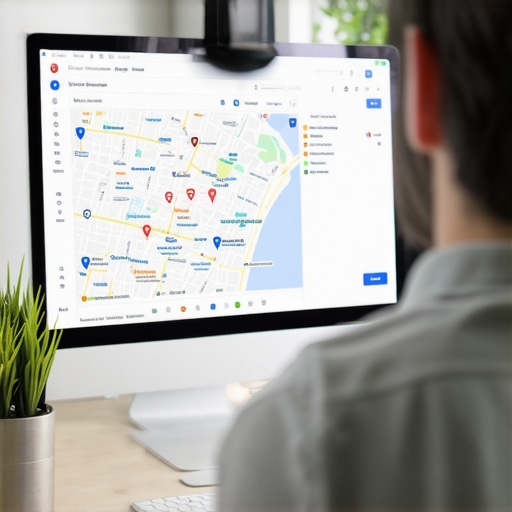
Ever felt that sinking feeling when your local business isn’t showing up on Google Maps, even after countless hours of tweaking and hoping? I’ve been there. I remember the frustration of watching competitors leap ahead in rankings while my efforts seemed to go unnoticed. It’s like shouting into the void, right? That lightbulb moment hit me hard when I finally realized that mastering Google Maps isn’t just about basic listings — it’s about strategic, expert-level optimization that actually works. If you’re tired of being invisible in Jacksonville’s crowded local scene, stick around. Today, I’ll share proven tactics that transformed my visibility and can do the same for you. Ready to leave the shadows behind? Let’s get into it.
Why Local SEO and Google Maps Matter Right Now
In 2024, local search dominates the way customers find businesses nearby. According to recent studies, over 78% of local mobile searches result in an offline purchase, and Google Maps is often the first stop for consumers looking for services in Jacksonville. If your business isn’t ranking well on Google Maps, you’re essentially invisible to a huge chunk of your potential customers. I learned this the hard way; early on, I made the mistake of thinking that just having a Google My Business (GMB) profile was enough. Spoiler alert: it’s not. Without proper optimization, your listing can be buried under competitors. That’s why smart, tailored strategies are more critical than ever. For a deep dive into effective tactics, check out [this comprehensive guide](https://jacksonvillelocalseo.com/google-maps-ranking-hacks-for-jacksonville-local-businesses).
Is Google Maps Optimization Really Worth the Hype?
Absolutely. I used to dismiss the hype around maps ranking, thinking it was just a buzzword. But then I faced the reality that my business was missing out on local leads because I hadn’t invested in proper Google Maps SEO. The biggest mistake I made early on was neglecting regular updates and ignoring customer reviews — both crucial for rankings. According to Moz’s local search ranking factors, reviews and consistent profile updates are key signals for Google. If you’ve ever wondered whether all this effort is worth it, just remember: local searches lead to local sales. And the more I focused on reputable, proven strategies, the higher my rankings climbed. Curious? Let’s explore how you can do the same for your Jacksonville business.
Optimize Your Google My Business Profile for Maximum Impact
Start by claiming and verifying your Google My Business (GMB) listing if you haven’t already. Think of your GMB profile as your digital storefront — the more complete and accurate it is, the easier it is for clients to find and trust you. Fill out every section meticulously: business name, address, phone number, website, and hours. Use high-quality images that showcase your business, and regularly update your profile with fresh content and posts. Don’t forget to add relevant categories and keywords specific to Jacksonville to tell Google exactly what you offer. For expert tips on managing your GMB effectively, check out GMB management strategies.
Implement Local Keyword Optimization Like a Pro
Research keywords your Jacksonville customers are searching for using tools like Google Keyword Planner or SEMrush. Incorporate these keywords naturally into your business description, service listings, and posts. Imagine keywords as breadcrumbs guiding Google through your profile and website — the more relevant and strategically placed they are, the higher your ranking. For example, phrases like “Jacksonville plumbing services” or “best pizza in Jacksonville” should be integrated thoughtfully. This targeted approach helps your business appear in local searches and increases foot traffic. For detailed keyword tactics, explore maps optimization strategies.
Leverage Customer Reviews to Build Authority
Reviews are the social proof that Google and customers trust. Encourage satisfied clients to leave detailed reviews on your GMB profile. Respond promptly to reviews, especially negative ones, demonstrating your commitment to customer service. Think of reviews as votes of confidence; the more positive votes you gather, the higher your business ranks. In Jacksonville’s competitive landscape, reviews can be the deciding factor. To craft a review acquisition plan, see GMB management tips.
Build Local Citations for Credibility
Ensure your business information is consistent across local directories like Yelp, Bing Places, and industry-specific sites. Citations act as trust signals for Google, confirming your legitimacy. Use your exact business name, address, and phone number (NAP) everywhere. Think of citations as digital word-of-mouth endorsements from reputable sources in Jacksonville. Regular audits of your citations prevent inconsistencies that could hurt your rankings. For a comprehensive citation-building guide, visit maps optimization strategies.
Engage Locally with Content and Community
Create local content that resonates with Jacksonville residents — blog posts, event announcements, and local guides. Share these on your GMB profile and your website, integrating local keywords and landmarks. Participate in community events and get featured online; social proof and local relevance boost your visibility. Think of this as planting roots in Jacksonville’s digital landscape, making your business a known entity. For ideas on local engagement, see Jacksonville SEO services.
Monitor, Analyze, and Adjust Your Strategy Continuously
Use tools like Google Analytics and Google Search Console to track your rankings, traffic, and engagement. Regularly review your Google My Business Insights to see what’s working and what’s not. Adjust your keywords, content, and review strategy based on performance data. Think of this as tuning your engine — the better your adjustments, the faster and higher you’ll climb in Jacksonville’s local search results. For ongoing optimization tips, visit Google Maps ranking strategies.
Many Jacksonville business owners and marketers fall prey to misconceptions about local SEO, especially when it comes to Maps optimization and GMB management. Let’s dig deeper into what most people get wrong and how to avoid costly traps that sabotage your Google Maps rankings.
Are Reviews the Only Factor That Matters?
While reviews are undeniably influential, overemphasizing them without considering other elements is a common mistake. Some believe that accumulating reviews will automatically boost rankings, but Google’s algorithm considers a balanced mix of signals, including citation consistency, on-page relevance, and engagement metrics. Ignoring technical SEO or local citations can leave your efforts ineffective. For instance, even with stellar reviews, inconsistent NAP (Name, Address, Phone Number) across directories can hurt your visibility. To truly master local SEO, integrate review management with comprehensive strategies like Maps optimization tactics.
What Advanced Mistakes Do Many Jacksonville Businesses Overlook?
One sophisticated error is neglecting the importance of structured data markup, such as schema.org LocalBusiness schema. Implementing structured data helps Google better understand your business details, services, and local context, which can significantly enhance your local pack presence. Studies show that structured data can improve click-through rates and rankings in local search (Search Engine Journal). Many overlook this nuance, assuming content alone suffices. Additionally, not optimizing for voice search trends can be a hidden pitfall; voice queries tend to be more conversational and location-specific, demanding tailored keyword strategies. To stay ahead, consider future-proofing your maps SEO.
Are There Hidden Traps in GMB Management?
Absolutely. A common trap is focusing solely on listing edits without monitoring insights and analytics regularly. GMB insights reveal valuable data about user behavior and search patterns, informing better optimization. Failing to interpret this data can lead to misguided efforts. Another mistake is neglecting post engagement—posting updates, offers, or events consistently can boost visibility, but many ignore this ongoing activity. Also, beware of duplicate listings; they dilute your authority and confuse Google. Regular audits are essential to prevent this. For expert management tips, I recommend reviewing GMB management strategies.
Have you ever fallen into this trap? Let me know in the comments. Remember, effective local SEO is a blend of technical expertise, strategic planning, and ongoing management. Don’t settle for surface-level tactics—dig deeper, optimize smarter, and watch your Jacksonville business rise to the top of Google Maps rankings.
Keeping your local SEO efforts, especially Google Maps rankings, consistently strong requires more than just initial optimization. It’s about leveraging the right tools, performing regular maintenance, and adapting to evolving algorithms. As an experienced Jacksonville SEO specialist, I rely on a combination of advanced software and strategic methods to ensure my clients’ maps rankings stay high over time.
How do I maintain Google Maps rankings over time?
Regular monitoring is essential. I use tools like BrightLocal and Whitespark for citation audits. These platforms help me identify inconsistencies across directories, ensuring your NAP (Name, Address, Phone) data remains uniform. Inconsistent citations can confuse Google and hurt your rankings, so ongoing citation management is non-negotiable.
For review management, I utilize Podium and BirdEye to automate review requests and respond promptly. Reviews are still a significant ranking factor, so maintaining a steady flow of positive feedback, coupled with active responses, keeps your profile authoritative.
On the technical side, I implement Schema.org LocalBusiness markup using tools like Google’s Structured Data Markup Helper. Implementing structured data helps search engines understand your business better, which can give your local pack a competitive edge. According to Google’s official documentation, proper schema use can improve visibility and click-through rates.
To manage your ongoing strategy, I recommend setting up a dashboard using Google Analytics and Google Search Console. These tools provide insights into search performance, user behavior, and keyword trends, allowing you to adjust your tactics proactively.
Tools I recommend for long-term success
Beyond the basics, I turn to SEMrush and Ahrefs for keyword tracking and competitor analysis. These platforms help me stay ahead of Jacksonville’s local competitors by identifying new search trends and opportunities. Regularly updating your profile with fresh, locally relevant content—such as community events or new services—also keeps your business top of mind.
Looking ahead, the trend toward voice search and AI-driven local queries will accelerate. Optimizing for natural language and conversational keywords will become even more vital. Tools that incorporate voice search analytics, like Answer the Public, can help you craft content that answers real customer questions, boosting your local visibility.
Remember, consistency is key. Regularly review your map rankings and citations, respond to reviews, and update your profile. This ongoing effort ensures your Jacksonville business remains at the top of Google Maps, driving local traffic and sales.
Feeling ready to take your local SEO to the next level? Try implementing structured data markup today — it’s a game-changer for long-term rankings. Need expert help? Contact us at Jacksonville Local SEO and let’s keep your maps ranking high together!
Lessons That Took Me Too Long to Learn About Local Map Optimization
- One of the biggest mistakes I made early on was underestimating the power of structured data. Implementing schema markup for local businesses can dramatically improve how Google perceives your listing and can push you ahead of competitors who ignore this step. It was a game-changer when I finally prioritized this technical detail.
- Another lesson was the importance of consistent NAP information across all directories. I used to think updating my Google My Business profile was enough, but I found out that mismatched contact details elsewhere hurt my rankings. Regular audits of citations keep your profile authoritative.
- Reviews are vital, but they’re only part of the story. Responding to reviews, especially negative ones, built trust and showed Google my business was active and engaged. It took me a while to realize that review management is an ongoing process, not a one-time effort.
- Don’t forget about local content. Creating blog posts, community event updates, and local guides helped me build relevance and authority. Google favors businesses that are engaged with their Jacksonville community online and offline.
- Lastly, monitoring your analytics and adjusting your strategies regularly keeps your rankings stable and climbing. I learned to use tools like Google Search Console and third-party software to track what’s working—and what’s not—and to refine my approach continually.
Tools and Resources That Accelerated My Success
- BrightLocal: I trust it for citation audits and local rank tracking because it provides clear insights and easy-to-action reports that keep my listings consistent and optimized.
- SEMrush: This is my go-to for keyword research and competitor analysis. It helps me identify new opportunities and monitor local search trends in Jacksonville.
- Google’s Structured Data Markup Helper: Implementing schema markup has been crucial. This free tool makes it straightforward to add the necessary code to my website, boosting my local visibility.
- Podium: Automating review requests and responses has saved me time and improved my review profile, which directly impacts my rankings.
Your Next Step in Google Maps Domination
Mastering Google Maps ranking for Jacksonville isn’t a one-and-done task—it’s an ongoing journey. Staying updated with the latest strategies, leveraging the right tools, and committing to continuous improvement will set you apart from the competition. If you’re ready to elevate your local SEO game, I encourage you to start implementing structured data today and keep a close eye on your analytics. Remember, persistent effort and smart optimization are your best allies in climbing the Google Maps ranks. Want personalized advice? Reach out through our contact page and let’s grow your Jacksonville business together!


Reading this detailed breakdown of Google Maps optimization really resonates with my own struggles when I first started focusing on local SEO in Jacksonville. The emphasis on structured data and consistent citations is something I overlooked initially, and I saw my rankings stagnate because of it. Implementing schema markup was a game-changer for me—once I understood how Google interprets this technical layer, my visibility improved noticeably. One challenge I encounter now is keeping up with the ever-evolving voice search trends. With voice commands becoming more natural, I’m curious how others are adapting their keyword strategies for conversational queries. Has anyone found effective ways to target voice search without losing sight of traditional SEO? It seems like balancing both is key for long-term success in local maps rankings.