
One crisp morning, I realized I’d been chasing the same frustrating cycle for months—my client’s Google Maps rankings hovering just outside the coveted top spots. Despite countless tweaks, the visibility didn’t budge. That was my lightbulb moment: I was fixating solely on zip codes, hoping they’d be the magic key. Yet, seasoned Jacksonville SEO experts know there’s a more effective approach, one rooted in neighborhoods.
Focusing on Neighborhoods: The Hidden Power in Jacksonville SEO
In my early days, I believed that optimizing for zip codes alone would lead to better rankings. I thought, “If I target the zip code area, my client will naturally rank higher.” But the results were disappointing. It wasn’t until I began paying close attention to neighborhoods—specific communities, districts, and local landmarks—that I saw real progress. Neighborhoods often encompass multiple zip codes, but they carry a distinct identity and search behavior that can be more accurately targeted.
Let me ask you: Have you ever noticed how people search for local services like “best coffee shop near Riverside” rather than just “coffee shop Jacksonville”? That’s because communities matter. They resonate more deeply with local searchers and are much easier to build authority around than broad zip code areas. Plus, Google understands neighborhoods as more meaningful entities, especially when it comes to local SEO and Maps rankings.
Early on, I made the mistake of relying only on local keywords based on zip codes, ignoring the neighborhoods’ unique language and signals. That mistake cost me valuable rankings and potential leads. Since then, I’ve learned that controlling neighborhood-based signals—like Google My Business (GMB) profiles, local reviews, and neighborhood-specific content—is the game-changer.
For anyone serious about dominating Jacksonville’s Maps rankings, shifting focus from zip codes to neighborhoods is essential. Want to see how to harness this strategy effectively? I’ll walk you through proven tactics that help local businesses stand out in the neighborhoods that matter. But first, let’s tackle the common doubts many have about this approach.
Identify Key Neighborhoods in Your Target Area
Start with precise research. Use tools like Google Maps and local directories to list neighborhoods where your clients operate. Visit each area virtually, noting landmarks, community pages, and local forums. This helps you understand the language residents use, common queries, and community-specific signals. For example, during a campaign for a Jacksonville coffee shop, I mapped out Riverside, San Marco, and Springfield, noting unique terms people used on social media and reviews to tailor content.
Optimize Google My Business Profiles for Each Neighborhood
Create dedicated GMB listings for each neighborhood if possible. Ensure consistency across listings—name, address, phone number—and embed neighborhood-specific keywords naturally in descriptions. Use the local landmarks and neighborhood names in your posts, updates, and service descriptions. For instance, including phrases like “serving Riverside residents” boosts relevance. This targeted approach signals to Google that your client is a neighborhood authority, improving Maps rankings.
Leverage Local Content Tailored to Communities
Develop content that resonates with neighborhood audiences—blog posts, local guides, and news about community events. Share stories about specific neighborhoods, highlighting local testimonials and partnerships. For example, I created a blog post featuring the history of Springfield’s dining scene, incorporating neighborhood slang and landmarks. This content attracted local backlinks and reviews, which are critical signals for Maps SEO. Blogs like Jacksonville SEO services recommend consistent neighborhood-focused content for sustained local visibility.
Build Local Citations and Review Signals
Ensure your business is listed accurately on all local directories for each neighborhood. Focus on encouraging reviews from local customers who mention specific neighborhoods or landmarks. Respond to reviews with neighborhood-specific references to reinforce relevance. During a strategy session, I prompted a client to ask Riverside customers to mention their neighborhood in reviews. This improved local ranking signals and increased visibility in Maps for that community.
Engage with the Community on Social Platforms
Participate in neighborhood groups, forums, and social media pages. Share useful content, support local events, and respond promptly to inquiries. Local engagement boosts brand awareness and signals to Google that your business is an integral part of the community. For instance, I coordinated with a Jacksonville client to sponsor a local park cleanup, gaining social mentions and backlinks that positively impacted their local SEO and Maps position.
Monitor and Adjust Based on Neighborhood Data
Use analytics tools to track performance metrics like Map views, search impressions, and review volume per neighborhood. Adjust your strategy based on which neighborhoods show growth or decline. Regular audits help identify overlooked communities or content gaps. For example, I noticed Springfield’s maps rankings lagged despite active efforts; focusing more on reviews and localized content there eventually turned the tide, elevating their presence. This iterative process ensures ongoing optimization aligned with neighborhood dynamics.
Many local businesses assume that simply optimizing their Google My Business profiles and sporadically creating content will lead to dominant Maps rankings. However, in my experience, this surface-level approach often masks deeper misconceptions. One widespread myth is that ranking higher on Google Maps is primarily about keyword stuffing and aggressive citations. While these are components, they don’t address the nuanced signals that influence Google’s local algorithm, especially in a competitive market like Jacksonville. Seasoned experts understand that effective Maps optimization requires a layered strategy—focusing on authority, relevance, and user engagement—beyond the typical checkboxes. ^
Why do so many Jacksonville local SEO efforts fall short even when following best practices?
Often, it’s because businesses overlook the importance of neighborhood-specific signals and fail to adapt their strategies to Google’s evolving local ranking factors. Recent studies indicate that reviews mentioning specific landmarks or neighborhoods significantly boost local trust signals, as Google prioritizes community relevance. Ignoring the unique character of Jacksonville neighborhoods—like Riverside or San Marco—renders generic SEO tactics ineffective. Instead, dedicated local outreach, tailored content, and strategic GMB management are crucial to stand out. You can learn about the latest maps optimization strategies for Jacksonville businesses in 2025 to stay ahead.
Another trap to avoid is assuming consistent posting alone will sustain rankings. Google favors authoritative profiles with genuine engagement—reviews, questions, and user-generated content—especially when interwoven with neighborhood-specific info. Relying solely on citations or keyword-linked descriptions creates a false sense of security. The real secret lies in building community trust signals through active engagement and local loyalty. Check out top Jacksonville SEO services to dominate Google Maps for comprehensive guidance.
Furthermore, many overlook the importance of analytics and continuous adjustment. Local SEO isn’t static; rankings fluctuate with changes in algorithms, user behavior, and market competition. Ignoring data or failing to monitor neighborhood-specific performance can make efforts moot. An advanced tactic is employing GIS data and local trend analysis to refine targeting, an approach often underestimated. For in-depth insights, consider the latest mastering local SEO in Jacksonville guide.
In sum, neglecting these nuanced signals, over-relying on outdated tactics, and ignoring the importance of community engagement lead many straight into similar pitfalls. To truly elevate your Jacksonville business, focus on layered, neighborhood-aware strategies that adapt with the algorithm’s evolution—because what worked yesterday might harm your ranking today. Are you falling into this common trap? Let me know in the comments!
Keep It Working: Tools I Recommend for Sustained SEO Success in Jacksonville
Staying on top of local SEO, especially for competitive markets like Jacksonville, requires more than just initial optimization. It demands a suite of reliable tools and strategic methods to monitor, refine, and scale your efforts over time. One essential resource I personally rely on is BrightLocal. I use it daily to track citation consistency, gather and analyze reviews, and monitor local search rankings—crucial for long-term Maps visibility. Its ability to provide granular insights into local citations ensures I can quickly identify and correct inconsistencies that might hurt rankings.
Another must-have is Google Search Console. It’s indispensable for understanding how your site performs in local organic search, revealing which queries and neighborhoods generate the most traffic. I often pair this data with Google My Business insights to diagnose issues with Maps rankings. Consistent monitoring helps preempt drops, especially when Google updates its local algorithm—something I expect will evolve significantly with advances in AI and user behavior analysis, as highlighted in recent maps optimization strategies for Jacksonville in 2025.
For content marketing and neighborhood targeting, I swear by SEMrush’s Local SEO Toolkit. Its keyword tracking, competitor analysis, and backlink auditing empower me to keep content relevant and authoritative—two pillars of enduring local rankings. With Google moving increasingly towards AI-driven relevance signals, having up-to-date data from tools like SEMrush will be vital to adapt quickly and stay ahead.
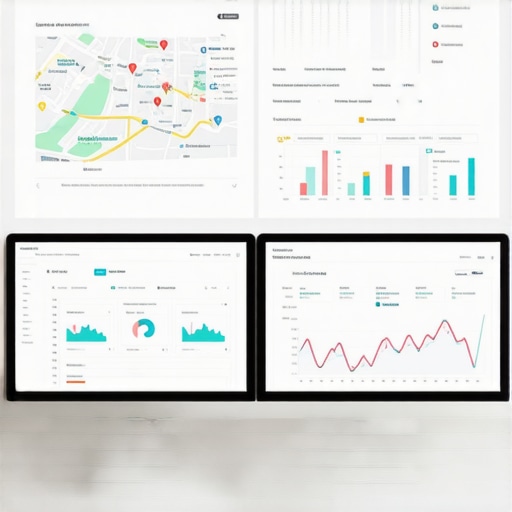
Implementing these tools is just the first step. The real power comes from how you interpret and act on the data. Regular audits, such as reviewing neighborhood-specific metrics, will help you identify emerging opportunities or declining neighborhoods. I recommend setting aside time quarterly to reassess your mapping and review strategies based on this data, ensuring consistency and relevance. Strategies like refining GMB profiles, local content creation, and citation updates should be a continuous process—never static, always evolving. To deepen your toolkit, explore the comprehensive master local SEO in Jacksonville guide, which includes advanced practices for 2026 and beyond.
One specific tactic I advise trying now is maps optimization strategies that leverage the latest in AI trend data. Incorporate neighborhood-specific cues into your content and GMB posts—Google increasingly values local nuance. Regularly update your review strategy, encouraging neighborhood mentions and engaging with community feedback. These small but consistent efforts ensure your visibility remains strong amid the ever-changing local landscape.
How do I maintain lasting results in Jacksonville’s local SEO game?
The answer lies in persistent monitoring, strategic adjustments, and embracing new tools early. Combining reliable software like BrightLocal, Google Search Console, and SEMrush creates a feedback loop that keeps your campaigns efficient and effective. Remember, local SEO isn’t a one-time effort but a long-term investment—treat it that way, and you’ll dominate Jacksonville Maps rankings for years to come. Stay ahead of the curve by continuously educating yourself through authoritative resources and experimenting with advanced tactics. Ready to push your Maps visibility even further? Start by integrating one of these tools into your routine today, and watch your local presence grow.
What I Wish I Knew Before Diving into Jacksonville SEO
My biggest breakthrough came when I realized that focusing solely on zip codes was a dead end. It was the neighborhood-specific signals—like landmarks, local slang, and community centers—that truly moved the needle. This lesson taught me that deep local knowledge outperforms generic tactics every time.
Another insight was the importance of genuine community engagement. Sponsoring local events and participating in neighborhood groups created trust and word-of-mouth referrals, which translated into higher Maps rankings and reviews mentioning specific areas. Building authentic relationships is a secret weapon many overlook.
Lastly, I learned that no single tool or trick defeats continuous learning and adaptation. Regular audits, monitoring neighborhood trends, and staying updated with Google’s evolving algorithmic signals are essential. Investing in your education—like exploring comprehensive guides to master local SEO in Jacksonville—keeps you ahead of the curve.
Tools That Became My Secret Allies
My go-to resources include BrightLocal—for citation consistency and review tracking, which are critical for local prominence. I rely on Google Search Console to decode neighborhood-specific queries and performance metrics, helping me refine strategies. SEMrush provides invaluable insights into local keywords and competitor tactics, keeping my content and citations sharp. These tools form the backbone of a resilient local SEO approach.
Pairing these with a proactive review strategy and community engagement ensures your client’s neighborhood authority grows sustainably. Remember, effective Jacksonville SEO isn’t built overnight; it’s a continuous process of listening, adjusting, and connecting.
Your Next Move Starts Now
Embracing neighborhood-focused strategies can transform your Google Maps rankings and overall local visibility. The path to becoming a community fixture involves strategic content, genuine engagement, and diligent monitoring. With the right mindset and tools, you can elevate your clients’ presence and growth—so why wait?
Have you ever tried tailoring your SEO efforts to specific neighborhoods? Share your experiences below and let’s learn from each other’s journeys toward local success!
,



I recently started focusing more on neighborhoods rather than just zip codes for a client in Jacksonville, and the results have been impressive. It’s clear that understanding local landmarks, community slang, and even local events can really boost local SEO efforts. I love the idea of creating neighborhood-specific content and optimizing GMB profiles for each community — it makes the campaigns feel more targeted and authentic.
One thing I’ve noticed is that encouraging reviews mentioning specific neighborhoods or landmarks makes a big difference in building trust signals with Google. Has anyone seen noticeable improvements in their rankings by actively prompting customers to include neighborhood details in reviews? Also, I’m curious about how others track success at a neighborhood level — do any of you use GIS data or other local trend analysis tools? Would love to hear your insights on maintaining momentum in such targeted strategies!
This post really resonated with my experience in local SEO, especially in a diverse market like Jacksonville where neighborhoods can have such distinct identities. Early in my career, I too focused heavily on zip code-based optimization, only to realize that it often missed the mark because people are search-aware of neighborhoods and landmarks. Incorporating neighborhood signals—like local landmarks or slang—has consistently improved our rankings and engagement. One thing I’ve found particularly effective is coordinating review requests that explicitly ask customers to mention specific neighborhood landmarks—like the Riverside Park—this authenticity seems to boost trust signals and local relevance.
I’m curious, does anyone here use GIS or local trend tools to monitor neighborhood performance over time? I’ve been exploring some GIS mapping tools to visualize where our efforts are pulling the most results and to identify underserved areas. Balancing between data-driven insights and local community engagement seems to be the recipe for sustained success. Have you noticed a particular neighborhood in Jacksonville that offers more growth potential right now? Would love to hear how others are balancing content creation, reviews, and analytics in their strategies.