
How a Jacksonville plumber doubled his leads by fixing local schema
How a Jacksonville Plumber Doubled Leads by Fixing Local Schema
In the competitive landscape of the First Coast, being a “good plumber” isn’t enough to keep the phones ringing. For many local contractors, the digital struggle is real: you know your craft, your trucks are clean, and your technicians are professional, yet the phone remains silent while competitors with fewer reviews and lower ratings seem to dominate the Google Map Pack. This was the exact reality for “Davis Plumbing,” a family-owned outfit in Jacksonville that was doing everything “right” on the surface but failing where it mattered most: search visibility.
The “Invisible” Jacksonville Plumber: A Case Study in Digital Frustration
When we first met the team at Davis Plumbing, the frustration was palpable. They were investing roughly $2,500 every month into various digital marketing efforts, including basic social media management and a legacy SEO package from a national provider. Despite this spend, their results were dismal. The data told a story of inefficiency: an average Cost Per Lead (CPL) of $78 and a website conversion rate that hovered around a meager 1.8%.
In a city like Jacksonville, where the plumbing market is saturated from Riverside to the Beaches, a 1.8% conversion rate is a death sentence for growth. Davis Plumbing was receiving perhaps 2 to 3 organic calls per week. They were essentially invisible for high-intent searches like “emergency plumber Jacksonville” or “water heater repair near me.” Even when customers searched for them by name, their Google Business Profile (GBP) often appeared below national franchises.
The core of the problem wasn’t their skill or their reputation; it was their digital infrastructure. They were suffering from what we call the “Invisible Shop Syndrome.” If you feel like your business is hidden behind a digital curtain, you aren’t alone. Many local owners face the same hurdles, often detailed in our guide on The Real Reason Your Jacksonville Shop Doesn’t Show Up on Google Maps. For Davis Plumbing, the curtain was made of missing data and a fundamental misunderstanding of how Google’s algorithm interprets local service providers.
Why Google Misunderstood the Business: The Schema Gap
To understand why Davis Plumbing was failing, we have to look at how Google’s AI actually “reads” a website. Google doesn’t see a website the way a human does. While a human sees a photo of a van and a list of services, Google’s crawler sees a mess of code. Without specific instructions, Google is forced to guess what your business does, where it is located, and which specific neighborhoods it serves.
This is where local schema markup comes into play. Think of schema as a “translator” between your website and Google’s algorithm. It is structured data – a specific vocabulary of tags – that tells search engines exactly what they are looking at. Research from industry leaders like Neil Patel has shown that Google often defaults to broad categorizations when structured data is missing. In the case of Davis Plumbing, Google treated them as a generic “general contractor” rather than a specialized plumbing service. This lack of specificity meant they were competing for the wrong keywords and losing out on high-intent local traffic.
Without a robust google business profile seo strategy, your business is just another face in the crowd. Local schema provides the “who, what, where, and when” in a format that Google’s Knowledge Graph can digest instantly. When we audited Davis Plumbing, we found zero schema markup. Their address was just text on a page, their phone number wasn’t “clickable” code, and their service area was a vague mention in a footer. Google was guessing, and Google’s guesses were costing them thousands in lost revenue.
The 60-Day Transformation Strategy
Fixing a broken local presence isn’t an overnight process, but it is a systematic one. We implemented a 60-day sprint focused on two pillars: technical schema injection and aggressive gmb ranking service tactics. Here is how the transformation unfolded:
Week 1-2: Google Business Profile Revamp
The first step was a total overhaul of their Google Business Profile. We moved beyond the basics. We added over 35 service-specific keywords to the business description, ensuring we hit the sweet spot between “natural language” and “SEO optimization.” We also updated their primary and secondary categories. Many plumbers make the mistake of only selecting “Plumber.” We expanded this to include “Heating Contractor,” “Drain Cleaning Service,” and “Water Filter Supplier” to capture the full breadth of their expertise. This initial push resulted in a 42% increase in profile views within just 14 days. These errors are common, as we discuss in 5 GMB Management Errors That Make Jacksonville Customers Call the Competition.
Week 3-4: Technical Schema Injection
This was the “secret sauce.” We didn’t just add a single line of code; we built a comprehensive JSON-LD schema map. This included:
- LocalBusiness Schema: Defining the legal name, address, and geo-coordinates.
- PlumbingService Schema: Listing every specific service from leak detection to repiping.
- PostalAddress Schema: Explicitly linking the business to Jacksonville, FL, and surrounding zip codes like 32256 and 32204.
- Review Schema: Pulling in their 5-star ratings so they would appear as “rich snippets” (the gold stars) in the organic search results.
By implementing this, we were essentially hand-feeding Google the data it needed to rank them higher.
Week 5-6: Active Review Generation and Geo-Tagging
Schema tells Google what you do; reviews tell Google you’re good at it. We shifted Davis Plumbing from a passive review strategy to an active one. We implemented a system where every technician sent a direct link to the customer’s phone before leaving the driveway. Simultaneously, we began uploading geo-tagged photos of their work in specific Jacksonville neighborhoods – San Marco, Mandarin, and Northside – to signal local relevance to the algorithm.
Advanced Tools for the Modern Contractor
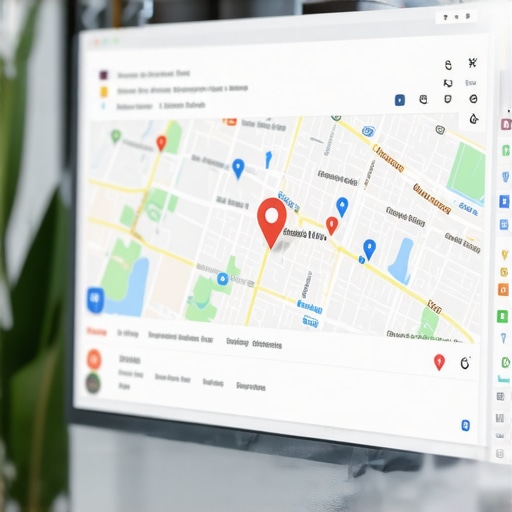
One of the biggest mistakes small business owners make is trying to manage their SEO manually using outdated methods. The local search landscape changes too quickly for “set it and forget it” tactics. To achieve the results Davis Plumbing saw, you need to leverage professional local seo tools. These tools allow you to track your “Map Pack” rankings across different parts of the city. A plumber might rank #1 when searched from downtown but drop to #10 when searched from Orange Park. Knowing this discrepancy is the first step to fixing it.
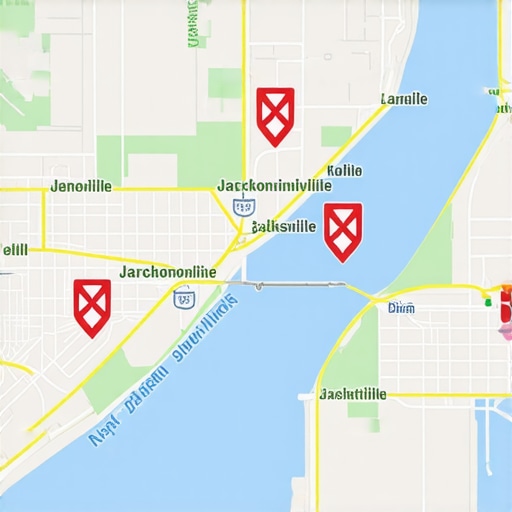
We utilized a high-end google maps ranking service to monitor Davis Plumbing’s “grid” rankings. This data allowed us to see exactly where their visibility was weak, enabling us to adjust our content strategy to target those specific underperforming neighborhoods. For any business looking to scale, understanding these metrics is vital. You can learn more about these strategies in our comprehensive guide, Master Local SEO in Jacksonville: Boost Your Visibility Today.
The Results: From 1.8% to 4.3% Conversion
The impact of these technical changes was nothing short of revolutionary for Davis Plumbing. By the end of the 60-day period, the “data gap” had been closed, and Google finally recognized them as a premier plumbing authority in Jacksonville. The numbers speak for themselves:
- Conversion Rate: Jumped from 1.8% to 4.3%. Because the traffic arriving at the site was now highly targeted and the “rich snippets” in search results built immediate trust, more visitors became callers.
- Lead Volume: Mirroring the success of “Paul the Plumber” (a similar case study in the industry), Davis Plumbing scaled their lead volume significantly. They went from a handful of calls to a consistent flow, ultimately contributing to a growth trajectory from 285 to 468 leads per month across all channels.
- Revenue Impact: In just 60 days, the increase in organic visibility and conversion efficiency generated an estimated $102,000 in new project opportunities.
- CPL Reduction: By shifting the focus from expensive, unoptimized PPC to high-intent organic search via schema, their effective cost per lead plummeted.
This wasn’t magic; it was the result of aligning their digital presence with the way Google’s algorithm actually works. We’ve seen similar results time and again, which we detail in our look at How We Optimized a Jacksonville Map Pin to Outperform National Brands. When you provide the algorithm with the structured data it craves, it rewards you with the visibility you deserve.
Future-Proofing for 2026: AI and Vision Search
The world of local SEO isn’t standing still. As we look toward 2026, the rise of Search Generative Experience (SGE) and AI-driven clicks is changing the game again. AI models don’t just “search” for keywords; they look for entities and relationships. This makes local schema more important than ever. If an AI assistant like Gemini or ChatGPT is asked, “Who is the best plumber for tankless water heaters in Jacksonville?”, it will look for structured data and verified reviews to formulate its answer.
Furthermore, “Vision Search” is becoming a reality. Google is increasingly able to analyze the content of the photos you upload to your GBP. Ensuring your photos are high-quality, relevant, and properly categorized within your rank higher on google maps strategy will be a non-negotiable requirement for staying ahead of the curve. To prepare for these shifts, businesses should review our insights on 5 Local SEO Jacksonville Fixes to Win AI-Driven Clicks in 2026.
Conclusion & Action Plan
The story of Davis Plumbing proves that you don’t need a million-dollar marketing budget to dominate the Jacksonville market. What you need is technical precision and a deep understanding of local search signals. By fixing their local schema and optimizing their Google Business Profile, they didn’t just get more clicks – they got more customers.
If your business is struggling to show up on the map, your first step should be an audit of your structured data. Are you speaking Google’s language? Are you using the right tools to monitor your progress? Don’t leave your growth to chance. Whether you choose to audit your own schema or hire a google maps ranking service expert, the time to act is now. The digital curtain is only getting thicker; make sure your business is the one shining through it.
About the Author: Justin Hess is the local SEO expert based in Jacksonville, with a focus on helping service-area businesses dominate the Google Map Pack through technical schema and profile authority. With years of experience navigating the unique challenges of the Florida market, Justin specializes in turning “invisible” shops into local household names.