
The Real Reason Jacksonville Roofers Get Outranked by National Competitors
The Real Reason Jacksonville Roofers Get Outranked by National Competitors
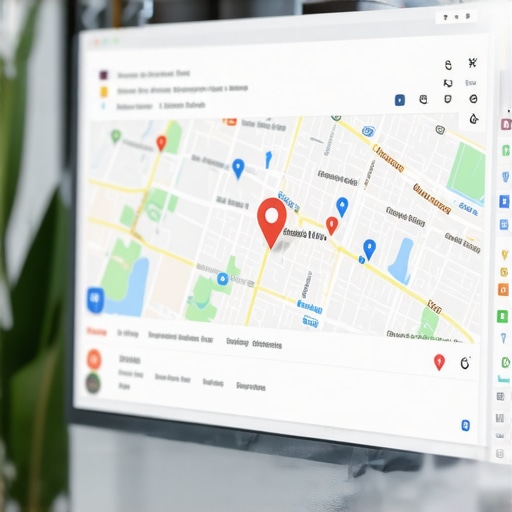
You’ve spent twenty years building a reputation in Duval County. You’ve replaced thousands of roofs from the historic bungalows of San Marco to the sprawling estates in Ponte Vedra. Your Google Business Profile has 150 five-star reviews, all from legitimate neighbors you’ve helped after a Nor’easter. Yet, when you search for “roofing contractor Jacksonville,” you find yourself buried at the bottom of the Map Pack, or worse, on page two.
Above you sits a national franchise with a generic office in a Riverside coworking space and a website that looks like it was generated by a template in 2015. They have fewer reviews, half the experience, and zero local soul. It’s infuriating, but it’s not an accident. There is a technical, data-driven reason why the “little guy” is losing the digital turf war in Jacksonville.
The reality is that 46% of all Google searches now show local intent, and a staggering 97% of consumers search online for local businesses before making a call. In a high-ticket industry like roofing, where monthly searches for services exceed 5,000 in major metros like Jacksonville, being invisible is costing you roughly 167 potential leads every single day. If you aren’t in the top three results of the map, you don’t exist to half of the market. This guide is designed to pull back the curtain on why this happens and how you can use google business profile seo to reclaim your territory.
Before we dive into the mechanics, you need to understand that the game has changed. For more information on the shifting landscape, check out 4 Brutal Truths About Jacksonville Map Ranking That Most Agencies Won’t Tell You.
Section 1: The Authority vs. Relevance Gap
The primary reason a national brand outranks a local Jacksonville roofer often comes down to the “Authority vs. Relevance” gap. Google’s local algorithm relies on three core pillars: Proximity, Relevance, and Prominence. While you might win on proximity (you’re physically closer to the customer) and relevance (you clearly offer roofing), the national competitor is crushing you on prominence.
National brands have massive domain authority. Their websites have been active for decades and possess tens of thousands of high-quality backlinks from major media outlets and industry associations. When Google sees a massive site with high authority, it assumes that the local “branch” of that site is equally trustworthy. This “halo effect” allows a mediocre franchise location to leapfrog a superior local contractor.
However, relevance is your secret weapon. Google wants to provide the most helpful result. If a user in Mandarin is looking for “tile roof repair,” and your website has hyper-local content specifically about tile roofing challenges in the Jacksonville humidity, you have a relevance edge. To bridge the gap, you must treat your google business profile seo as a technical asset, not just a digital yellow pages listing. You need to signal to Google that your “Prominence” in Jacksonville is higher than a national brand’s “Prominence” on the global web.
Section 2: Why National Competitors Win (And How They Cheat)
National competitors don’t just win because of their budgets; they win because they play the algorithm like a fiddle. They use sophisticated SEO teams to build local “silos” that trick Google into thinking they are more established in Jacksonville than they actually are. One common tactic is the use of virtual offices or “executive suites” to gain a physical address in high-value zip codes like 32256 or 32204, even if their actual crews are dispatched from a warehouse in Orange Park.
Worse yet is the “keyword stuffing” epidemic. You’ll see competitors change their legal business name on Google to “Jacksonville Roofing & Emergency Roof Repair Pros” to capture search volume. While this is a direct violation of Google’s terms of service, it often works until someone reports it. National brands also leverage massive ad spends to “warm up” their local profiles, increasing their click-through rates and signaling to Google that they are the preferred choice.
Google updates its algorithm roughly 4,500 times yearly. Staying ahead requires a level of vigilance that most roofing owners simply don’t have time for. If you want to fight back, you need to understand How Local Jacksonville Shops Beat National Chains on Google Maps. It requires a shift from passive management to aggressive, data-backed optimization.
Section 3: The 2026 Shift: Interaction Over Distance
As we move into 2026, the traditional “proximity” factor is losing its iron grip on the Map Pack. Google has realized that just because a roofer is the closest to a customer doesn’t mean they are the best. The algorithm is shifting toward “Interaction Signals.” This means Google is looking at how users interact with your profile: Are they clicking your “Call” button? Are they requesting directions? Are they lingering on your photos?
We are also seeing the rise of “Vision Search” and “AI-Summary Pins.” Google’s AI now scans the photos you upload to your profile. If a customer searches for “metal roofing Jacksonville,” and your profile is filled with high-res, geo-tagged photos of metal roof installations in the Avondale area, Google’s AI identifies those images and prioritizes your profile over a competitor who only has a generic logo and a picture of their truck. This is where you can rank google business profile higher by simply being more visually active than the national guys.
Interaction is the new currency. If you can drive more engagement to your profile than the national brand, you will eventually outrank them, regardless of their backlink profile. For a deeper dive into this, read How Jacksonville Pros Use 2026 Interaction for Map Rankings. This shift represents a massive opportunity for local roofers who are willing to engage with their digital presence daily.
Section 4: Hyper-Local Content & Geo-Targeted Pages
Most roofing websites are too generic. They have a “Services” page and a “Contact Us” page. If you want to dominate the Jacksonville market, you need to stop thinking about the city as one giant block. Jacksonville is a collection of distinct neighborhoods, each with its own roofing needs. The salt air in Atlantic Beach affects shingles differently than the shade and oaks in Ortega.
You need to build hyper-local “City Pages” or “Neighborhood Pages.” These aren’t just for SEO; they are for conversion. A homeowner in Nocatee wants to see that you’ve worked in Nocatee. These pages should include:
- Specific neighborhood landmarks and zip codes.
- Testimonials from customers in that specific area.
- Photos of jobs completed in that neighborhood.
- Information about local building codes or HOA requirements (e.g., specific shingle colors required in certain developments).
By creating this architecture, you capture “long-tail” search traffic that national competitors ignore. You can learn more about How local roofers outrank national crews using geo-targeted pages and why this is the most effective way to build local relevance in the eyes of Google’s 2026 algorithm.
Section 5: The Google Business Profile Optimization Checklist
To compete with national budgets, your technical execution must be flawless. National brands often have “set it and forget it” mentalities for their local branches. This is your opening. Use professional local seo tools to audit your presence and follow this checklist:
1. Primary and Secondary Categories
Ensure your primary category is “Roofing Contractor.” But don’t stop there. Add secondary categories like “Siding Contractor,” “Gutter Service,” and “Waterproofing Service” if applicable. This expands the “net” of searches you can appear for.
2. The “Verified-Only” Filter Trend
In 2026, Google is increasingly hiding profiles that haven’t completed the advanced video verification process. Ensure your business is fully verified and that your “Service Areas” are clearly defined by zip code, not just a 50-mile radius. This prevents your profile from being “diluted” by irrelevant searches in Georgia.
3. High-Frequency Posting
Treat your Google Business Profile like Instagram. Post at least three times a week. Use photos of active job sites, “before and after” shots of storm damage repairs, and quick tips for Jacksonville homeowners. This signals “Interaction” to the algorithm.
4. Attribute Optimization
Mark all relevant attributes: “Identifies as veteran-led,” “Emergency services available,” and “On-site estimates.” These small tags can be the deciding factor in the “AI-Summary Pins” that Google now generates for users.
By following a strict google business profile optimization strategy, you create a profile that is “louder” than the national brands, even if their website is technically larger.
Section 6: Review Strategy: Making Them “Stick”
Reviews are the lifeblood of local SEO, but many Jacksonville roofers are finding that their hard-earned reviews are disappearing. Google’s AI filters have become incredibly aggressive to combat review spam. If a customer leaves a review while connected to your office Wi-Fi, or if they use generic language like “Great job!”, the review is likely to be filtered out.
To make reviews “stick,” you need to coach your customers. Ask them to:
- Be specific about the service (e.g., “skylight leak repair” or “architectural shingle replacement”).
- Mention the neighborhood (e.g., “They came out to our home in Queen’s Harbour…”).
- Upload a photo with the review. Reviews with photos have a 65% higher “stay” rate and significantly more impact on your Map Pack ranking.
The “velocity” of your reviews – how consistently you get them – is more important than the total number. Five reviews a month, every month, is better than 50 reviews in one week followed by silence. For more on this, see Why Real Customer Reviews Are Getting Filtered and How to Make Them Stick.
Conclusion: Reclaiming the Jacksonville Map Pack
The “Map 3-Pack” drives almost 50% of all online engagement for local contractors. If you are currently being outranked by national franchises, it isn’t because they are better roofers; it’s because they are better at signaling “Prominence” to Google. But they have a weakness: they aren’t actually *here*.
By focusing on hyper-local content, driving interaction through visual updates, and using a sophisticated google maps ranking service, you can leverage your “home field advantage.” You know the streets of Jacksonville, the local weather patterns, and the specific needs of Duval County homeowners. It’s time your digital presence reflected that expertise.
Don’t let national brands siphon off the leads that belong to local businesses. Audit your profile, implement the 2026 interaction strategies, and start dominating the Jacksonville Map Pack today. The leads are there for the taking; you just have to be visible enough to claim them.