Why standard SEO tools often miss hyper-local ranking shifts in Jacksonville
Why Standard SEO Tools Miss Hyper-Local Ranking Shifts in Jacksonville
Imagine you’re a roofing contractor based in Mandarin. You wake up, grab your coffee, and log into your expensive, “industry-leading” SEO dashboard. Everything looks green. Your primary keywords are sitting at position #1. You feel a sense of accomplishment – until you realize the office phone hasn’t rung in three days. You check your leads; they’ve dried up. You search for “roofing repair near me” while standing in your driveway, and to your horror, you aren’t even in the top three. You’re buried under competitors from San Marco and Fruit Cove.
This is the Jacksonville “Ghost Drop.” It is a phenomenon where standard tracking tools report success while your actual market share is evaporating. The reason? Most google business profile seo strategies are built on “static” data, but Jacksonville’s geography and Google’s 2026 algorithm updates require a hyper-local, interaction-based approach. If you are trying to rank google business profile listings using tools designed for national campaigns, you are essentially flying a plane with a broken altimeter.
In the current landscape, the “Proximity Paradox” has taken hold. While proximity remains a core pillar, recent shifts toward “Answer Engine Optimization” and AI Overviews – as highlighted in 2026 Connectica research – mean that Google is now prioritizing context over mere distance. To stay ahead, you need to understand why your current tools are lying to you and how to implement Maps Optimization Strategies for Jacksonville Businesses in 2025 and beyond.
Why Zip Codes Are Too Big for Jacksonville
Jacksonville is the largest city by land area in the contiguous United States. This geographical reality is the primary reason why traditional local seo tools fail our local business owners. Most generic software checks rankings from a single data center or, at best, from the geographic center of a zip code. In a city like Jax, a single zip code can span miles of diverse neighborhoods.
Take the 32256 zip code, for example. It covers parts of Southside, Deerwood, and even stretches toward the e-Town area. If your google maps rank tracker tells you that you are #1 in 32256, it is likely pulling that data from a single point. However, the search results a user sees in a San Marco bistro are fundamentally different from what someone sees while parked in Ortega. Traditional “static” tracking provides a single average number, which is, quite frankly, a lie.
The 5-Mile Radius Limitation
Research into local search patterns shows a distinct “5-mile radius limitation” for most service-based businesses. Beyond this radius, the “Map Pack” becomes incredibly volatile. Standard tools don’t show you the “fringe” areas where you are losing leads. This is where why your website needs local schema to show up for neighborhood searches becomes critical. Without neighborhood-level data, you can’t see the “dead zones” in your visibility.
Geo-Grid vs. Static Tracking
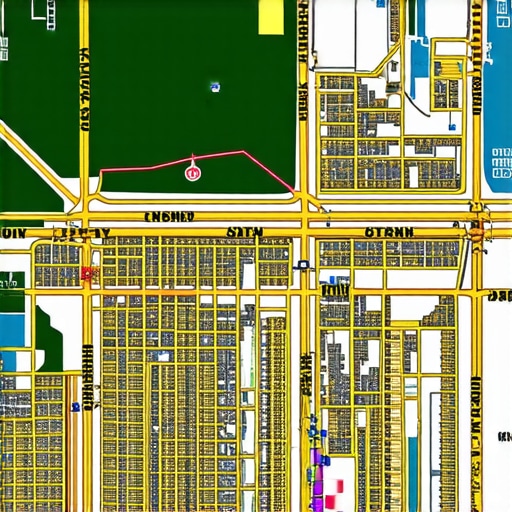
To truly understand your visibility, you must move away from static tracking and toward Geo-Grid tracking. A geo-grid doesn’t give you one ranking; it gives you a map of Jacksonville overlaid with a grid of nodes (e.g., every 500 meters). At each node, the tool performs a search. This reveals the truth: you might be #1 in Riverside, but as soon as you cross the bridge into the Northside, you drop to #12. This level of granularity is the only way to effectively manage a gmb ranking service in a city as spread out as ours.
The 2026 Interaction Shift: Beyond Proximity
As we navigate through 2026, the local SEO algorithm has undergone a massive shift. Google no longer just asks, “Who is the closest?” Instead, it asks, “Who is the most relevant and trusted based on real-world interaction?” This is a pivot from proximity-based ranking to interaction-based optimization. If you want to rank higher on google maps, you have to look at signals that standard tools completely ignore.
Data from recent industry discussions on platforms like Reddit suggests that many Jacksonville service businesses have noticed a “slowdown” in calls despite their rankings remaining stable on paper. This is because Google’s AI filters are now aggressively removing “anonymous” or low-context reviews and prioritizing “visual proofing.” If your profile doesn’t have recent, geo-tagged photos of your team working in Arlington or Mandarin, Google’s trust in your location decreases.
The Rise of Visual Proofing and AI Filters
The algorithm now analyzes the metadata of the images you upload. It knows if a photo was taken at a job site in Jax Beach or if it’s a stock photo downloaded from the web. Specialized google business profile optimization tools now focus on these interaction signals – clicks for directions, call-to-action button presses, and even the “dwell time” a user spends reading your updates. This is why how the map algorithm now prioritizes interaction over distance for Jacksonville shops is the most important concept for 2026.
Furthermore, AI Overviews (formerly SGE) are now the primary way users interact with local data. When a user asks, “Who is the best dentist in San Marco for kids?”, Google isn’t just looking at star ratings. It is parsing the text of your reviews to find specific mentions of “pediatric care” and “San Marco location.” Standard SEO tools that only track “dentist” as a keyword miss this semantic nuance entirely.
The Failure of Generic “National” SEO Software
Many Jacksonville businesses rely on “Big Box” SEO software like SEMrush or Ahrefs. While these are fantastic for national keyword research and backlink analysis, they are woefully inadequate for local map pack seo. These tools treat the “Map Pack” as a secondary feature, often failing to capture the real-time volatility of local search.
Missing Review Semantics
National tools don’t see “Review Semantics.” They see that you have 100 reviews and a 4.8 rating. They don’t see that none of those reviews mention “Northside” or “Arlington.” In the eyes of Google’s 2026 local algorithm, a business with 50 reviews that mention specific Jacksonville neighborhoods is more “authoritative” for those areas than a business with 500 generic reviews. This is a core reason why generic SEO tactics fail Jacksonville small businesses.
Hyperlocal Entity Building
Google views your business as an “Entity.” In Jacksonville, that entity needs to be tied to local landmarks, neighborhoods, and other local entities. A national tool won’t tell you that you need a backlink from a Jacksonville-based neighborhood association or a mention on a local news site like News4Jax. It will just tell you to “get more backlinks.” To truly dominate, you need gmb seo tools that understand the local entity graph of Northeast Florida.
Hyper-Local Solutions for Jacksonville Pros
So, how do you fix the “Ghost Drop” and ensure your business is actually being seen by the people who matter? You have to stop treating Jacksonville as one giant market and start treating it as a collection of distinct villages. Here are the actionable steps to take right now:
1. Use Specialized Grid-Based Tracking
Stop looking at a single ranking number. Implement local seo software that provides a detailed grid view of your visibility across the city. This allows you to see exactly where your “ranking wall” is. If you see that your visibility drops off sharply once you cross the St. Johns River, you know exactly where you need to focus your local content and citation efforts. Tools like SEO Viper or Megalodon SEO tools are designed specifically for this level of detail.
2. Build Neighborhood-Specific Backlinks
Instead of chasing “high DA” national links, focus on “high relevance” local links. A link from a Riverside-based blog or a sponsorship of a Little League team in Mandarin carries more weight for your google business profile seo than a generic guest post. This helps define your entity’s “service area” in the eyes of the AI. Learn how a local SEO consultant finds untapped hyperlocal leads in Jacksonville by focusing on these micro-communities.
3. Implement Advanced Local Schema
Your website’s code should explicitly tell Google which neighborhoods you serve. Don’t just list “Jacksonville.” Use Schema.org markup to list specific areas like “Avondale,” “Arlington,” and “Southside.” This provides the “context-aware” signals that the 2026 algorithm craves. When combined with a google business profile audit tool, this creates a powerful synergy that pushes your profile into the Map Pack for long-tail, neighborhood-specific queries.
4. Prioritize Visual and Interaction Content
Upload photos and videos weekly. These shouldn’t be polished marketing materials; they should be “proof of work.” A video of your truck driving through the streets of San Marco or a photo of a completed project in Jax Beach, with the location services turned on, provides the “visual proofing” that bypasses AI filters. This is the heart of a modern google maps ranking service strategy.
Conclusion: The 2026 Outlook
The days of “set it and forget it” local SEO are over. In a city as geographically complex as Jacksonville, “good enough” tracking is a recipe for declining leads. As Google continues to lean into AI-driven, interaction-based results, the gap between those using national tools and those using hyper-local strategies will only widen. Your competitors are likely still looking at their “Green” dashboards while their actual reach is shrinking. This is your opportunity to step in and claim the territory they are leaving behind.
Don’t let your business become a victim of the Jacksonville Ghost Drop. Audit your profile, switch to grid-based tracking, and start building real-world signals in the neighborhoods that matter. If you’re ready to see the truth about your rankings and dominate the local market, it’s time to look at the Top Jacksonville SEO Services to Dominate Google Maps and take control of your local digital footprint.
The future of search isn’t just local; it’s hyper-local. Are you ready to be found in every corner of Jax, from the Northside to the Beaches? The tools you choose today will determine your revenue tomorrow.