5 Local SEO Trends for 2026 That Shift How Jacksonville Customers Find You
5 Local SEO Trends for 2026 That Shift How Jacksonville Customers Find You
The Jacksonville business landscape in 2026 is more competitive than ever. From the bustling corridors of Riverside to the growing commercial hubs in Mandarin and the Beaches, the way local customers find services has undergone a seismic shift. According to the Florida Small Business Economic Trends (SBET) report, Florida small business owners remain remarkably confident about growth, even in the face of shifting economic pressures. However, that confidence must be backed by a modern digital strategy. If you are still relying on 2023 tactics to rank higher on Google Maps, you are likely invisible to half of your potential market.
I’m Justin Hess, and I’ve spent years navigating the nuances of the Jacksonville market. In 2026, Local SEO is no longer a simple checklist of keywords and citations. It is an ecosystem defined by AI-driven discovery and “Zero-Click” interactions. As Florida continues to rank #10 in the country for economic outlook (per the Rich States, Poor States report), the stakes for capturing local search intent have never been higher. Here are the five definitive trends that will dictate who wins the Jacksonville Map Pack this year.
Trend 1: The Rise of AI-Summary Pins and Contextual Clicks
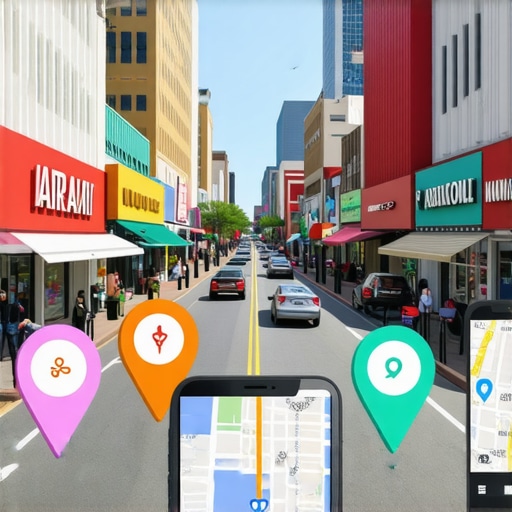
By 2026, Google Maps has fully integrated Search Generative Experience (SGE) into its mobile and desktop interfaces. We’ve moved past the era of the “Ten Blue Links” and even past the standard “Local 3-Pack.” Today, users are greeted by AI-Summary Pins. These are AI-generated descriptions that appear directly on the map interface, summarizing why a business is a good match for a specific query.
For example, if a resident in San Marco searches for a “family-friendly Italian restaurant with outdoor seating,” Google doesn’t just show a list. It pulls data from reviews, menu items, and even social media mentions to create a summary: “Known for its authentic pasta and patio misting system, perfect for Jacksonville summers.” If your profile doesn’t provide the right data points for the AI to scrape, you won’t be summarized, and you won’t be clicked.
This makes google business profile optimization for AI readability the single most important technical task for 2026. You need to ensure your attributes are hyper-specific. To see how your current profile stands up to AI scrutiny, using a google business profile audit tool is essential. These tools analyze your profile the same way Google’s LLMs (Large Language Models) do, identifying gaps in your “contextual relevance.”
In 2026, it isn’t just about being in the Top 3; it’s about what the AI says about you. If the AI summary highlights a negative trend in your recent reviews, your ranking won’t matter – the “Contextual Click” will go to your competitor. Businesses must move toward outranking AI-summary pins by feeding the algorithm high-intent, structured data.
Trend 2: Visual Proofing and the “Live-Feed” Ranking Factor
Static photos of your office or a generic stock photo of a service truck are officially dead weight in 2026. Google’s ranking algorithm now prioritizes what we call “Visual Proofing.” This is the requirement for frequent, high-quality, and geo-tagged visual content that proves your business is active and providing the services you claim.
Consider a Jacksonville roofing contractor. In the past, they might have uploaded ten photos of a finished roof and called it a day. In 2026, the algorithm looks for a “Live-Feed” of activity. This includes short-form vertical videos of the crew on-site in neighborhoods like Avondale or Nocatee, and photos with embedded GPS metadata that matches the customer’s search location. This is one of the most effective maps optimization strategies for Jacksonville businesses.
This trend is particularly powerful during local events like Small Business Saturday. When Jacksonville residents are out and about, they are searching for “near me” results that feel “live.” A business that posted a photo 3 hours ago of their current inventory or a happy customer will almost always outrank a business that hasn’t updated its visuals in a month. This real-time data acts as a signal of reliability. If you want to rank google business profile listings effectively, you must treat your GBP like a social media feed, providing constant visual evidence of your work.
Trend 3: The “Verified-Only” Filter and Zero-Trust Reviews
The “Review Apocalypse” of 2025 led to a massive shift in how Google handles feedback. In 2026, Google’s AI filters are incredibly aggressive, nuking any review that doesn’t have a high “trust score.” We have entered the era of Zero-Trust Reviews, where Google assumes a review is fake unless proven otherwise. This has caused many businesses to see their map pins suddenly stop showing because their review velocity looked suspicious to the AI.
The solution in 2026 is the “Verified Customer” badge. Google now integrates with various POS (Point of Sale) systems and credit card processors to verify that a reviewer actually spent money at your establishment. A single verified review is now worth more than twenty unverified ones. Managing this process has become a cornerstone of local seo services. In fact, industry data shows that 52% of the most valuable local SEO tasks now revolve around managing Google Business Profiles directly to ensure review integrity.
For Jacksonville service providers like plumbers or lawyers, this means you need a gmb ranking service that focuses on reputation management as much as technical SEO. You cannot afford to have your legitimate reviews filtered out by an over-zealous AI. Implementing fixes for AI review filters is now a mandatory part of any local marketing budget.
Trend 4: Hyperlocal Geo-Fencing and Search Intent Shifts
Proximity has always been a ranking factor, but in 2026, it has been refined into “Hyperlocal Geo-Fencing.” Google’s understanding of Jacksonville geography has become incredibly granular. It knows the difference between the traffic patterns on Atlantic Blvd versus Beach Blvd. It understands that a user searching for “coffee” at 8:00 AM near the St. Johns Town Center has a different intent than someone searching at 2:00 PM.
To rank in this environment, your website and GBP must be optimized for these specific “Intent Shifts.” This involves more than just mentioning “Jacksonville.” You need to leverage local schema markup and dedicated city pages that speak to the specific needs of different neighborhoods. For example, a Jacksonville plumber can double their leads by simply ensuring their schema correctly identifies their service areas down to the zip code level.
Furthermore, Google now uses movement patterns to determine “Contextual Relevance.” If your business is located in a high-traffic area of Riverside, but your customers never seem to stay long or engage with your profile while on-site, Google may demote you in favor of a competitor with better “dwell time” metrics. Using local seo tools to track your rankings across different city blocks – not just the city as a whole – is the only way to stay ahead of this geo-fencing trend. You need to know exactly where your “visibility drop-off” occurs to fix it.
Trend 5: Zero-Click Conversions and the “Message-First” Economy
The final and perhaps most jarring trend for 2026 is the rise of the Zero-Click Conversion. A vast majority of Jacksonville customers no longer visit your website. They find you on the Map Pack, read the AI summary, look at your “Live-Feed” photos, and then take action directly within the Google interface. Whether it’s booking an appointment, requesting a quote, or sending a direct message, the transaction happens on Google.
This “Message-First” economy requires a different approach to google business profile management. Your Q&A section is no longer a “set it and forget it” feature; it’s a living FAQ that needs to be updated weekly. If a customer in Mandarin asks, “Do you have emergency service available tonight?” and you don’t respond within minutes, Google’s AI will note your lack of responsiveness and may lower your ranking for future “emergency” queries.
To dominate the Jacksonville Map Pack, you must treat your Google Business Profile as your primary storefront. This is where a professional google maps ranking service becomes invaluable. They don’t just “rank” you; they manage the conversion funnel within the Map Pack itself. In 2026, the winner isn’t the business with the best website; it’s the business that makes it easiest to convert without ever leaving the search results.
Conclusion: Dominating the Jacksonville Map Pack in 2026
The “old way” of Local SEO – stuffing keywords into your business name and buying cheap citations – is not just ineffective; it’s a recipe for a permanent ban in 2026. To rank higher on google maps in the current Jacksonville market, you must embrace the reality of AI-driven search. You need visual proof, verified trust, and a message-first mindset.
Jacksonville is a city of neighborhoods, each with its own search behavior. Whether you are a roofer in San Marco or a law firm in Downtown, your digital presence must reflect the physical reality of your service. If you’re ready to see how these trends are impacting your specific business, it’s time for a professional local seo audit. By utilizing a high-end google maps rank tracker and staying ahead of AI-summary pins, you can ensure that when Jacksonville customers look for help, they find you first.