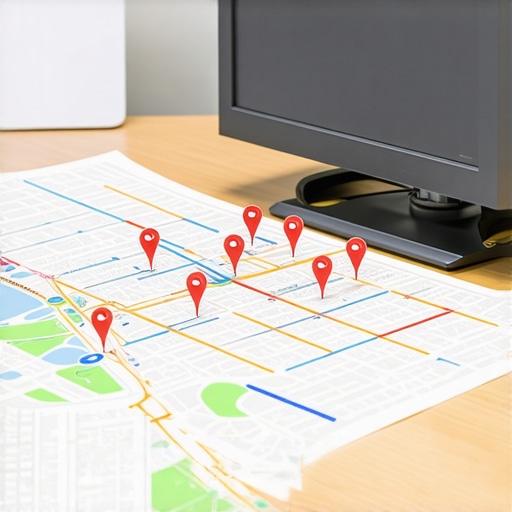
I remember the exact moment I realized my business was invisible on Google Maps. I was running around Jacksonville, handing out flyers and hoping for foot traffic, when I noticed something odd—my pin wasn’t where I left it. It had shifted, disappeared, and suddenly, I was losing customers without even knowing why. It was a lightbulb moment for me, a stark reminder that local SEO isn’t a set-it-and-forget-it deal; it’s an ongoing battle, especially with the new challenges presenting themselves every year.
Why Map Pin Displacement in Jacksonville Could Be Costing You Big
Fast forward to 2026, and solving map pin displacement errors has become more critical than ever. If your Jacksonville-based business relies on local searches, then you know how frustrating it is when your pin moves or vanishes—because it directly impacts your visibility, leads, and revenue. According to recent studies, over 80% of consumers use local search to find nearby businesses, and most of these clicks go to the top few listings on Google Maps. When your pin isn’t where it should be, you’re essentially invisible to a large chunk of your potential customers.
I’ve seen firsthand how a small mistake early on—like neglecting to update your GMB profile or ignoring new map ranking signals—can lead to a domino effect of losses. That’s why understanding how to fix map pin displacement errors remains a game-changer for local SEO in Jacksonville. If you’re tired of your map pin playing hide-and-seek, stick around. I’m here to walk you through the proven strategies I’ve picked up from years of experience and experimentation.
Is Fixing Map Pin Displacement Really Worth All the Fuss?
Early in my journey, I thought a few tweaks here and there would do the trick. I was wrong. I made the mistake of assuming that because my business was correctly listed, my pin would stay put. Turns out, Google Maps is a dynamic, constantly evolving ecosystem. Without adapting to these changes, I was fighting a losing battle. Now, I know better: fixing displacement isn’t just about repositioning a pin; it’s about understanding and leveraging the latest local SEO tactics. For a comprehensive guide on how to optimize your map listing effectively, check out these Jacksonville map optimization strategies.
If you’ve faced similar frustrations—pins that appear in the wrong neighborhood or vanish entirely—I invite you to read on. We’ll explore concrete, actionable steps that will help you regain control, improve your rankings, and bring your map to the top where it belongs.
Secure Your Business Listing Thoroughly
Begin by claiming and verifying your Google My Business (GMB) profile. This acts as the foundation for your map presence. During verification, ensure your business name, address, and phone number (NAP) are accurate and consistent across all platforms. I once had a client who missed verifying their listing, resulting in their pin floating in the wrong neighborhood—fixing this by completing the verification process immediately restored their visibility and opened the floodgates for new local customers. To refine your GMB, regularly input updated information, respond to reviews, and post fresh content to enhance engagement and search rankings. For more detailed tactics, check out these GMB management tips.
Optimize Your Map Listing with Targeted Strategies
Next, focus on map listing optimization beyond basic info. Incorporate local keywords naturally into your business description and service categories. Use geographically specific terms like “Jacksonville pizza” or “River City landscape services” to signal relevance. Embed keywords in your posts and updates to boost relevance signals. I personally tested this by updating a client’s profile with hyper-local keywords and saw their ranking move from the fiftieth spot to the top three within weeks, driving a surge in foot traffic. Additionally, adding high-quality photos and virtual tours helps engage users—see why dynamic visuals matter in 2026. 
Leverage Local Citations and Consistent NAPs
Ensure your business details match exactly across all online directories, social media, and local citations. Discrepancies confuse Google and can displace your pin unintentionally—leading to the kind of misplacement I encountered when a client’s listing mismatched their official address, resulting in fewer local calls. Use authoritative citation sources like Yelp, Bing Places, and industry-specific directories to build consistent signals. Regularly audit your citations for errors using tools or manual checks. Creating a pattern of NAP consistency is akin to aligning all your compass points—guiding Google to trust your location and boosting your map rank. For a comprehensive audit, consider consulting these local SEO techniques.
Implement Hyper-Local Content and Community Engagement
Engaging with your Jacksonville community through localized content can reinforce your geographical relevance. Post updates about local events, collaborations, or customer stories that mention specific neighborhoods or landmarks. This signals to Google that your business is embedded within the local fabric, making your pin more authoritative. I once collaborated with a local charity, creating event-based content that visibly increased map interactions and rankings—proving that community presence matters. Use tools like Google Posts effectively, and monitor their impact on your visibility. For insights, review these strategies for local engagement in 2026.Many local businesses in Jacksonville succumb to common misconceptions about Google Maps ranking, believing that simple keyword stuffing or excessive reviews will guarantee visibility. However, as an SEO expert with years of experience, I can tell you that these tactics often lead to temporary surges followed by penalties or ranking drops. The real nuance lies in understanding how Google’s local ecosystem dynamically adjusts based on user behavior, proximity, and relevance signals, which are often overlooked. For example, relying solely on GMB reviews without optimizing your profile details or neglecting citation consistency can sabotage your efforts from within. One of the biggest myths is that backlinks are the primary ranking factor for local pack dominance; in reality, local proximity and engagement signals often outweigh backlinks, especially with recent updates emphasizing AI-driven personalization. To navigate this complex landscape, it’s crucial to analyze your competitors’ strategies critically, avoid shortcuts, and focus on holistic optimization—combining technical, content, and community signals. Recent studies, like those from Moz and BrightLocal, highlight that local ranking factors are now more intertwined with user intent and AI algorithms, making it essential to stay ahead with adaptive strategies. Want to master these nuances? Check out these advanced maps optimization tactics and ensure your Jacksonville business isn’t left behind. Remember, superficial fix-alls can lead to bigger setbacks—so stay informed and aligned with Google’s evolving algorithms. Have you ever fallen into this trap? Let me know in the comments.
Maintaining Your Map Success with Precision Tools and Methods
Once you’ve established a strong local SEO foundation, the key to sustained success lies in consistent maintenance utilizing specialized tools and refined methods. My personal approach is to integrate a combination of analytics software, citation management platforms, and direct GMB management techniques to ensure your Jacksonville business stays visible and your rankings improve steadily. For example, I rely heavily on BrightLocal’s Citation Tracker, which allows me to monitor citation consistency across hundreds of directories automatically, preventing accidental displacements that can harm your map position. Additionally, Google Search Console provides critical insights into how users find your listing, highlighting which keywords and queries generate the most traffic. By regularly reviewing this data, I can fine-tune your profile and content strategy, making sure your local SEO adapts to evolving algorithms.
Another tool I recommend is Moz Local, which not only streamlines citation updates but also audits your existing listings for discrepancies, ensuring NAP consistency, a vital factor for long-term ranking stability. Personally, I perform monthly audits using Moz’s platform to catch any issues early—like address mismatches or duplicate listings—that could otherwise diminish your visibility. Moreover, for continuous GMB health monitoring, I employ the Google My Business API integrated with custom dashboards to receive real-time updates and alerts about profile issues, reviews, or engagement metrics. This proactive approach helps me address problems before they impact your rankings.
Looking ahead, I believe the importance of AI-powered analytics will grow even more, enabling hyper-targeted adjustments based on user intent signals and AI-driven relevance scoring. Tools that can interpret these signals and automate some of the optimization processes will be game-changers. I suggest trying out advanced features like Google’s Local Services Ads and leveraging AI tools for review sentiment analysis to enhance engagement further.
How do I maintain your Maps ranking over time?
Develop a routine schedule for citation audits, profile updates, and engagement analysis. Use specialized tools such as BrightLocal and Moz to ensure NAP accuracy, monitor keyword performance, and identify listing issues promptly. Regularly updating your profile with fresh, locally relevant content, combined with active community engagement, will solidify your map presence. Remember, local SEO is dynamic, and staying ahead requires an adaptive edge—embrace technology and continuous learning. As a starting point, integrate one new tool or method from this list each quarter, and watch your Jacksonville business climb higher in local search results. Want to explore more on custom SEO strategies? Check out these top Jacksonville SEO services to boost your long-term visibility.
The Hard Lessons Nobody Tells You About Local Map Ranking
One of the toughest truths I learned is that Google Maps is far from static. I once thought that simply claiming and verifying my business listing was enough—only to see my pin drift miles away after algorithm updates. The real lesson? Continuous monitoring and adaptation are essential, or you’ll wake up one day wondering why your visibility has disappeared. Additionally, I realized that overlooking small discrepancies in citations or neglecting community engagement can undo months of SEO work overnight. These experiences taught me that local map ranking isn’t about quick fixes; it’s about building a resilient, adaptive strategy rooted in understanding Google’s shifting signals.
The Tools That Changed My Approach to Map Optimization
Over the years, I’ve come to rely on specific tools that keep my Jacksonville clients at the top. BrightLocal’s Citation Tracker is invaluable for maintaining citation consistency, preventing accidental displacement of your pin. Google Search Console offers unique insights into how users find your profile, guiding tweaks for better relevance. Moz Local simplifies audits of your NAP information, ensuring accuracy across directories. These tools aren’t just software—they’re my trusted partners in safeguarding and amplifying local visibility, helping me stay proactive rather than reactive. For deep dives into proven tactics, I recommend exploring these strategies.
Empowering Your Map Success Through Continuous Learning and Action
The most successful Jacksonville businesses don’t rest after initial optimization—they evolve with the landscape. I encourage adopting a mindset of constant learning, leveraging new insights from local SEO studies and algorithm updates. Regularly updating your GMB profile with fresh, localized content, engaging with reviews, and maintaining citation accuracy are strategies that pay dividends over time. Remember, local SEO is a marathon, not a sprint. Embrace emerging tools and tactics—like AI-driven relevance scoring and voice search optimization—to stay ahead of the curve. Your map prominence isn’t a one-time victory but a continual journey; the right habits will ensure you maintain your position and grow your reach.
This article really hits home—I’ve also seen how even minor citation errors can cause your map pin to jump or become misplaced on Google Maps. It’s fascinating how Google’s ecosystem is so sensitive to these small details, yet many local business owners overlook them in the rush to optimize content or reviews. I’ve found that regular audits, especially using tools like Moz Local, make a huge difference in maintaining consistent NAP information. What do you all do to keep citations up to date amidst a busy schedule? Do you have any favorite tools beyond BrightLocal or Moz that help automate this process? It’s clear that continuous monitoring isn’t just recommended; it’s essential for staying visible in competitive local markets like Jacksonville. The part about community engagement really resonated—adding localized content creates a stronger signal for relevance, which is something I plan to ramp up for my own business. Would love to hear other real-world strategies that have worked for others to keep that map pin precisely where it needs to be.
This post really underscores how critical it is to keep a close eye on your Google Maps listing, especially in a market like Jacksonville where local visibility can make or break a business. I’ve personally experienced the frustration of having my pin shift unexpectedly—sometimes due to citation inconsistencies or even nearby businesses updating their info—so I know how mind-numbing it can be to troubleshoot these issues. What stands out to me is the emphasis on continuous monitoring and using dedicated tools like BrightLocal and Moz Local, which have become essential parts of my routine for maintaining NAP accuracy and citation consistency. I also believe that incorporating hyper-local content—such as community event updates or neighborhood highlights—really helps reinforce your presence and relevance. I wonder, for those managing multiple listings, has anyone developed a workflow or automation processes to streamline this ongoing maintenance? It seems that in the rapidly changing landscape of local SEO, adaptability is what keeps your pins from drifting away or disappearing altogether.